

Ms. Xiao is a new mother who is about 30 days postpartum. Not long ago, due to poor breastfeeding, her breasts were red, swollen and painful, and her whole body was feverish. She was treated with salt water in a hospital near her home for several days. Her symptoms became more and more severe. Her breasts were swollen and painful, and they were as heavy as stones. She went to the hospital again and was diagnosed with mastitis, which had begun to suppurate. The doctor told her that she needed surgery.Since the surgery may affect normal breastfeeding and leave scars, Ms. Xiao was weak after giving birth and suffered a double blow both physically and mentally. Later, under the introduction of a friend, I found Zhao Chunying, director of the Breast Surgery Department of our hospital, for treatment.
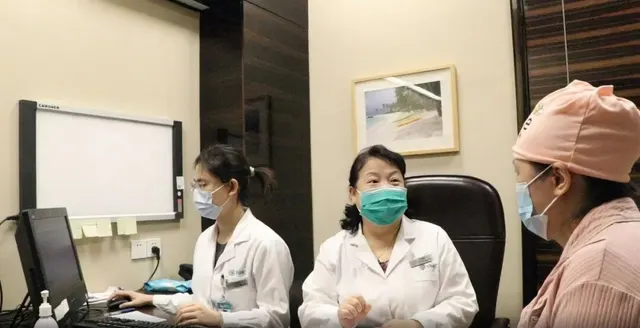
After understanding Ms. Xiao's situation, Director Zhao said, "Lactational mastitis is a common breast problem among new mothers. If not treated in time, it may evolve into suppurative mastitis. For Ms. Xiao's condition, using traditional surgical treatment methods, the milk ducts may be cut off, causing milk leakage. The wound is not easy to heal, and some need to be packed with gauze. Due to the long dressing change time,Not only does it affect normal breastfeeding, it may also affect the appearance of the breasts. "Based on Director Zhao's rich clinical experience and combined with Ms. Xiao's condition, we decided to adopt conservative methods for treatment. First, we followed Director Zhao's own "six-step milk knot dredging method" that has been used clinically for many years to clear the pus, and treat the pus non-invasively and minimally.At the same time, a combination of traditional Chinese and Western medicine is used to clear away heat and reduce swelling to improve the patient's immunity.

After a period of treatment, Ms. Xiao's condition continued to improve. She said, "As a new mother, the glass heart is very serious, and every little thing will be magnified infinitely. Director Zhao's treatment not only made her condition better, but her comfort also gave me unlimited strength. She became more and more cheerful, and her body and mind were healed."
The most common breast problems during lactation
1. Milk knot
Milk knots are the most common breast problem during lactation, also known as galactoplasmosis in medicine. Breast masses are mainly caused by blocked ducts and poor milk discharge. If the baby is not sucked in time when the milk is rising, the milk will become blocked, and if it is not cleared for a long time, it will easily develop into acute mastitis or suppurative mastitis.
2. Cracked nipples
Cracked nipples during lactation often occur among new mothers, but they can be prevented in advance. If chapping has occurred, you can apply some borneol, sesame oil, etc. to relieve pain and facilitate wound healing.
3. Mastitis
Mastitis not only brings physical pain, but also greatly affects the confidence of new mothers in feeding. It usually occurs acutely, with body temperature rising and breasts red and swollen. If not treated in time, it can easily lead to suppurative mastitis.
How to prevent breast problems that are common during lactation
1. Clean nipples and baby’s mouth before and after breastfeeding
New mothers must clean their nipples in time before and after breastfeeding to ensure smooth milk ducts. It is also recommended to clean the baby's mouth after breastfeeding to prevent small white spots from clogging the milk pores and forming milk knots.
2. Adjust living habits
You must maintain certain rules in your daily life, sleep, and diet. Avoid irritating foods, don’t stay up late, and have a regular schedule to improve your immunity and prevent bacterial infections.
3. Adjust your mentality
The emotions of new mothers can cause endocrine disorders, thereby affecting the secretion of milk. The lactation process is also regulated by hormones. It is recommended that new mothers keep a cheerful mood and participate in appropriate physical activities within their ability. Their families should give them enough care.
4. Massage
When daily treatment of milk knots and other problems requires massage techniques, it is recommended to find a professional doctor for symptomatic treatment. For example, Director Zhao Chunying's "six-step milk knot unblocking method" can help new mothers solve milk knot problems.
Six-step method to clear milk knots
Zhao Chunying, director of breast surgery at Shanghai International Medical Center, created the "six-step milk knot unblocking method" to treat the disease through years of clinical exploration and summary. This technique is based on the milk duct distribution rules of Western medicine anatomy, combined with the meridian theory and massage mechanics of basic TCM theory. It works from the surface to the inside and directly acts on the diseased area to expand the milk ducts and clear the milk knots.
Operation steps
The first step: preparation before the technique. The surgeon washes his hands regularly, prepares 1 to 2 sterilized towels that are moderately wet and dry, and places a breast-feeding bucket.
Step 2: Clear the exit. Hold the towel in your right hand, hold the nipple open with the index finger and thumb of your left hand, and use the towel to clean the surface milk stains, milk plugs, peeling epidermis, small white spots, etc. Clean your nipples to ensure a smooth outlet for milk.
Step 3: Lift and pinch the nipple. Use the index finger and thumb to lift and pinch the nipple from up and down, left and right directions respectively, while cleaning and pinching, to check whether the milk discharge is smooth and to increase the milk line.
Step 4: Push on the areola. Relieve the pressure on the areola area, increase the flow of milk pores and thicken the milk line.
Step 5: Push away the accumulated milk. Use the index finger and middle finger to push evenly from the root of the breast to the direction of the nipple, with the force increasing from light to heavy. Be careful not to rub the skin and avoid blood vessels to avoid skin redness, swelling, damage, local breast pain, and new induration.
Step 6: Check the remnants. Use your right hand to check the left breast, and your left hand to check the right breast. Use your index, middle, and ring fingers to comprehensively check both breasts. If there are no obvious lumps or tenderness, you can continue breastfeeding after confirming that the milk accumulation has disappeared and the milk can be discharged smoothly.